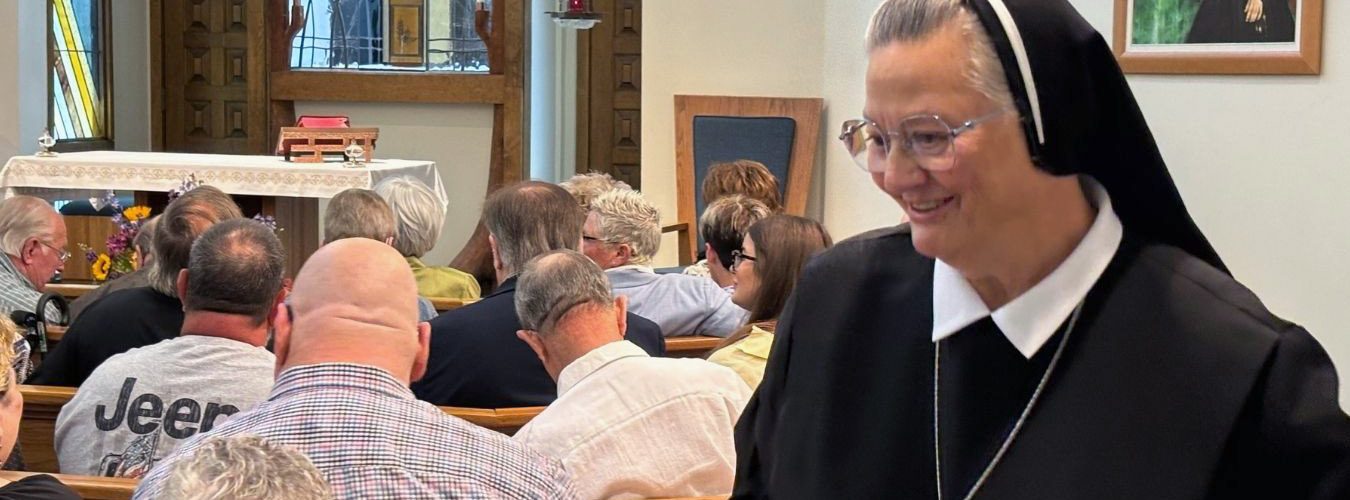
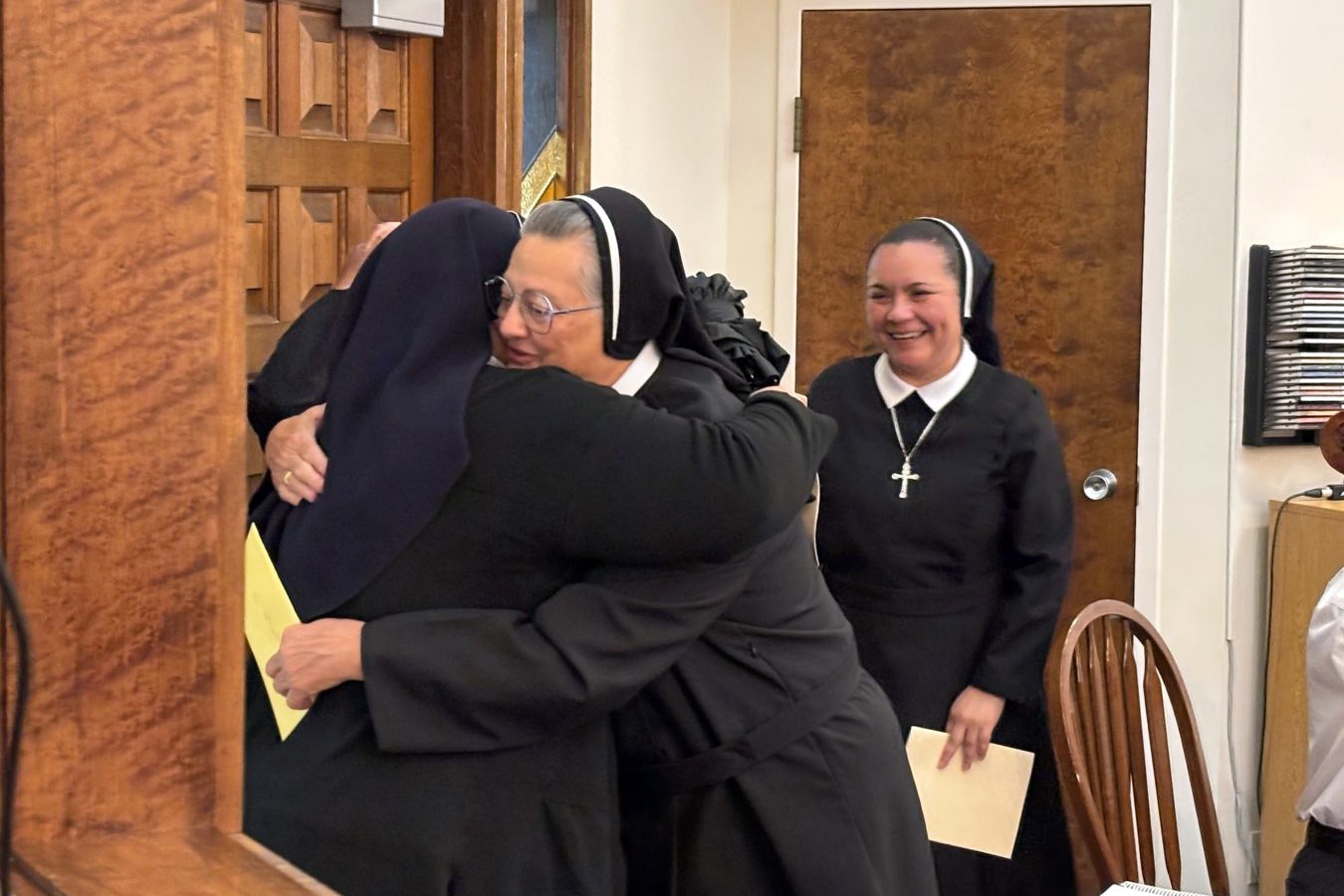
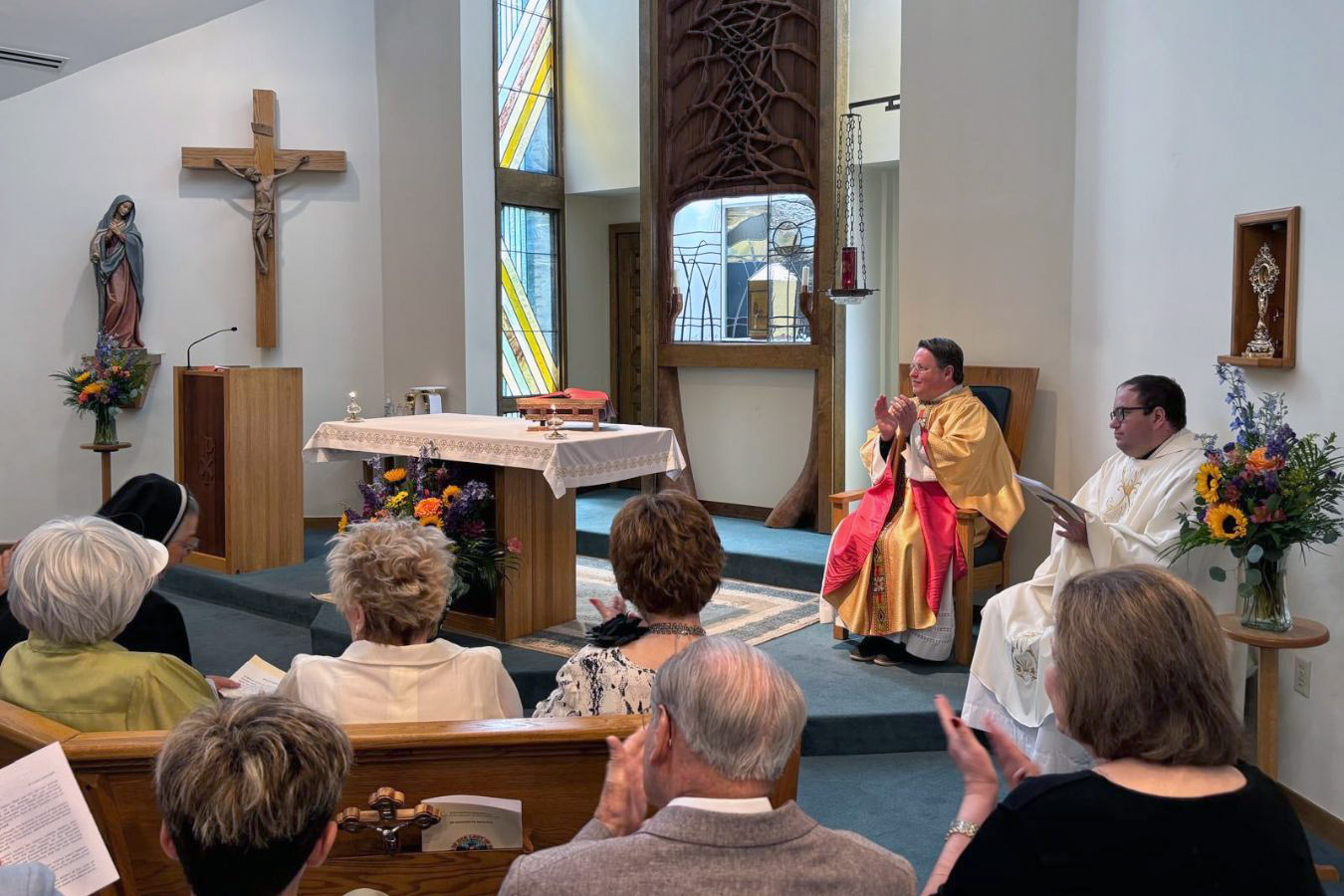
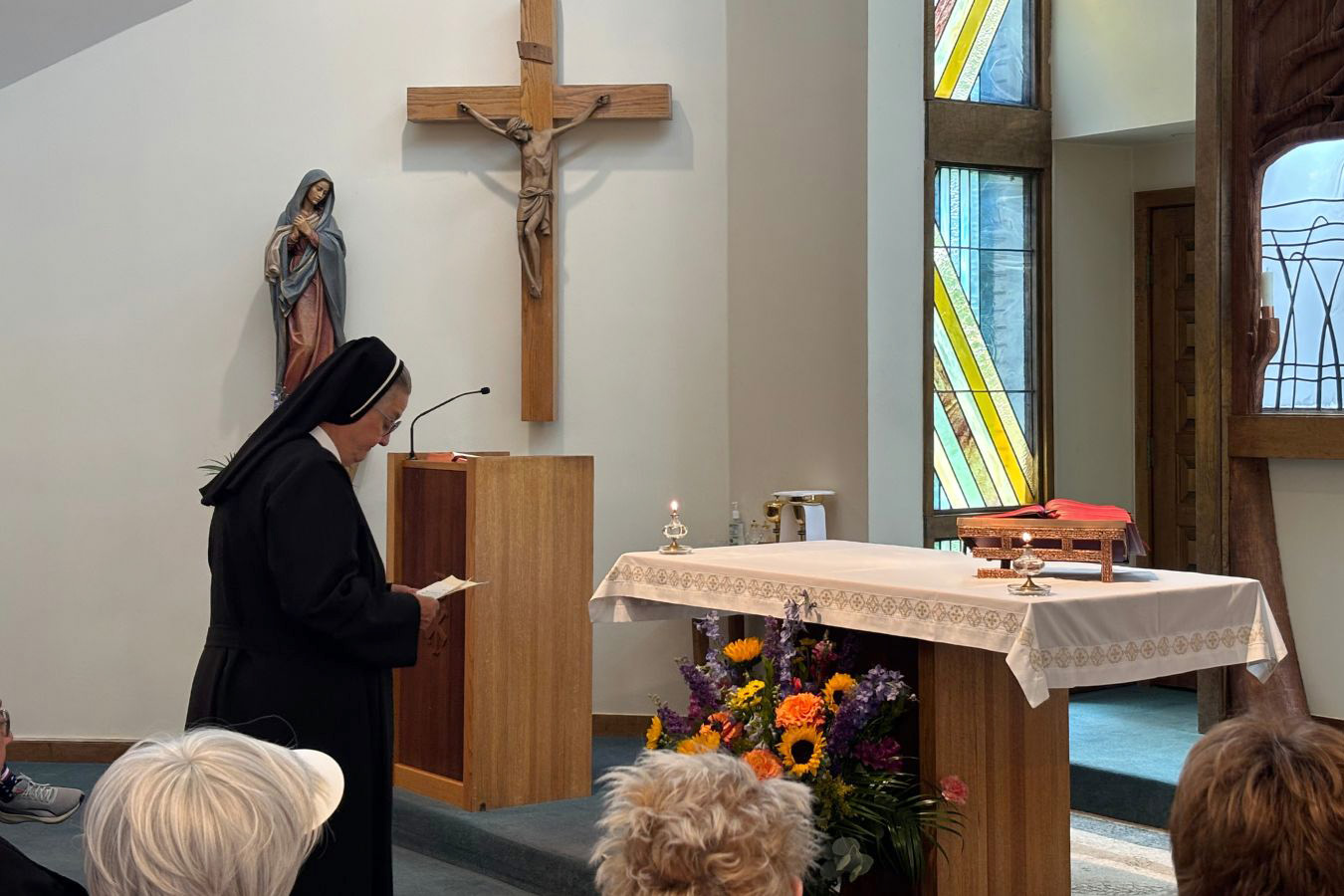
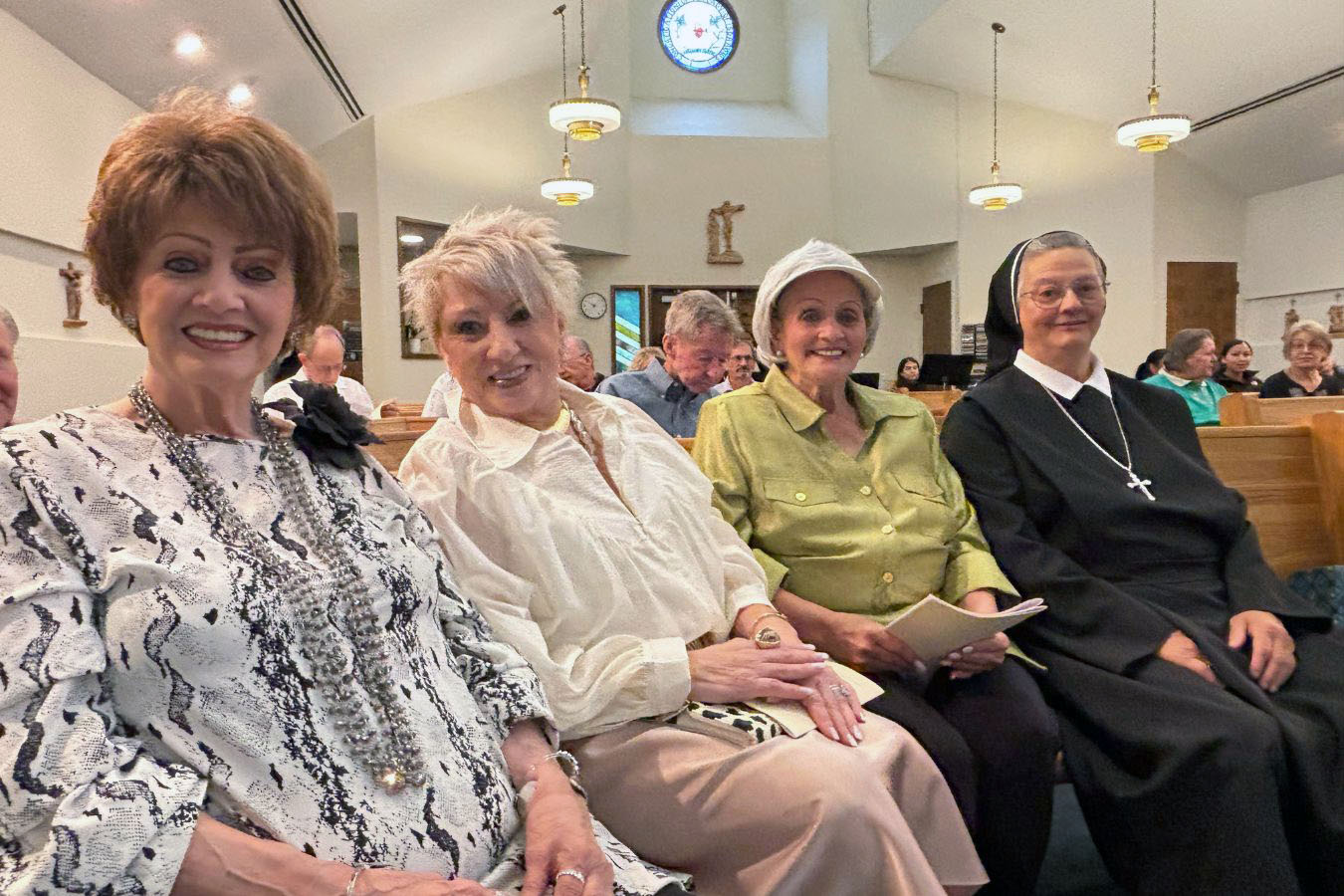
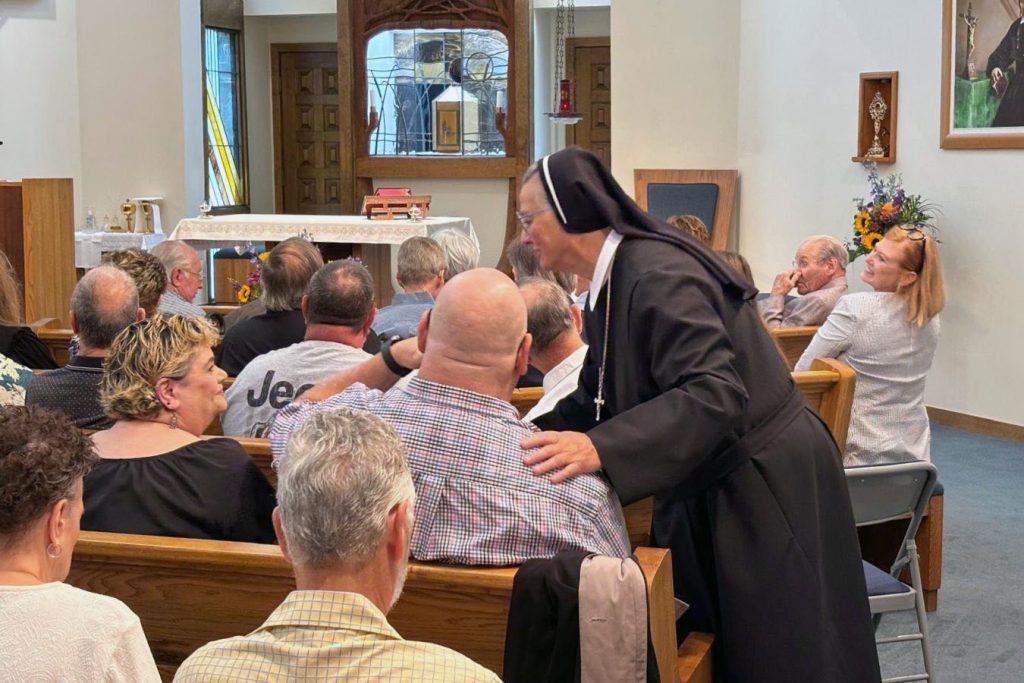
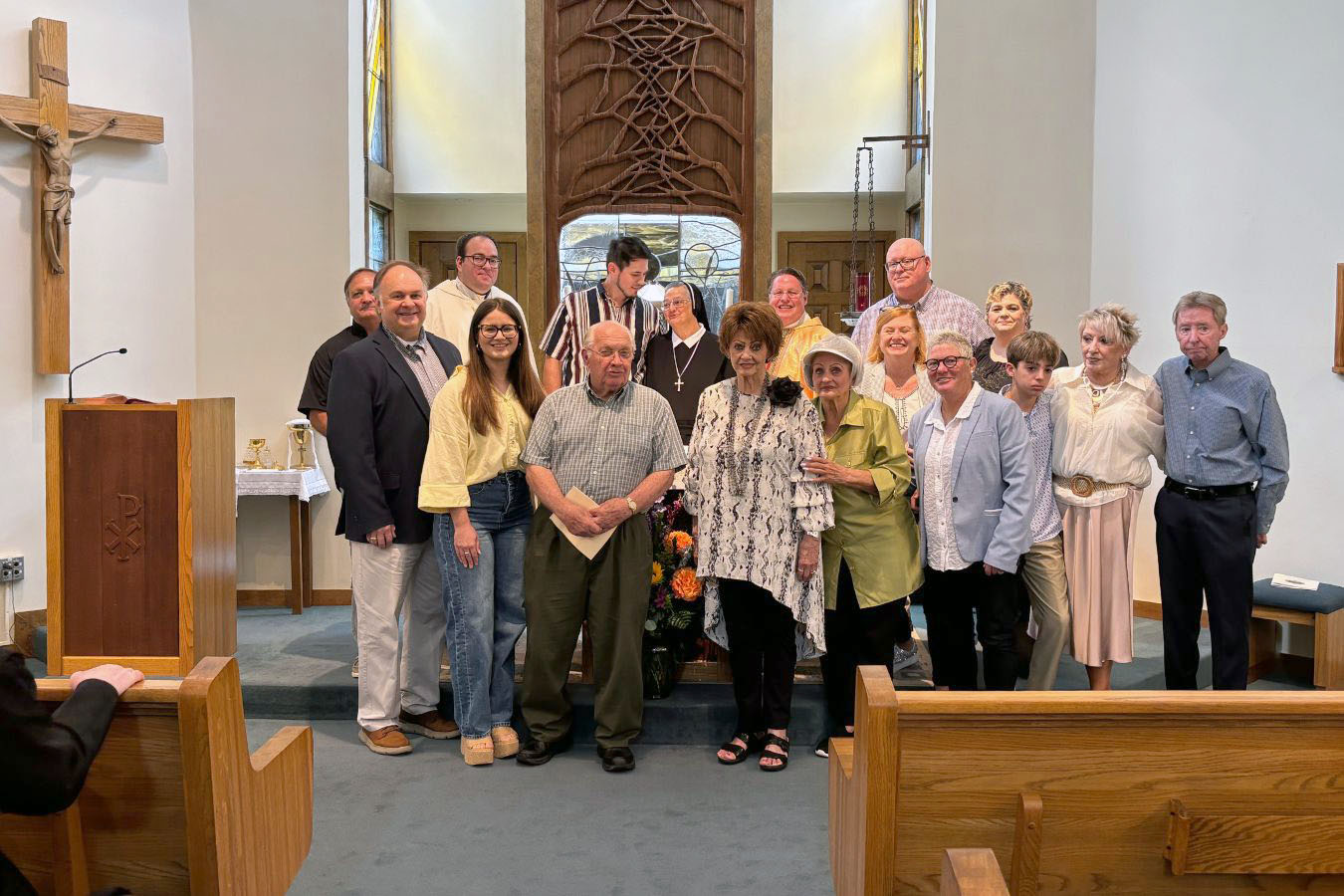
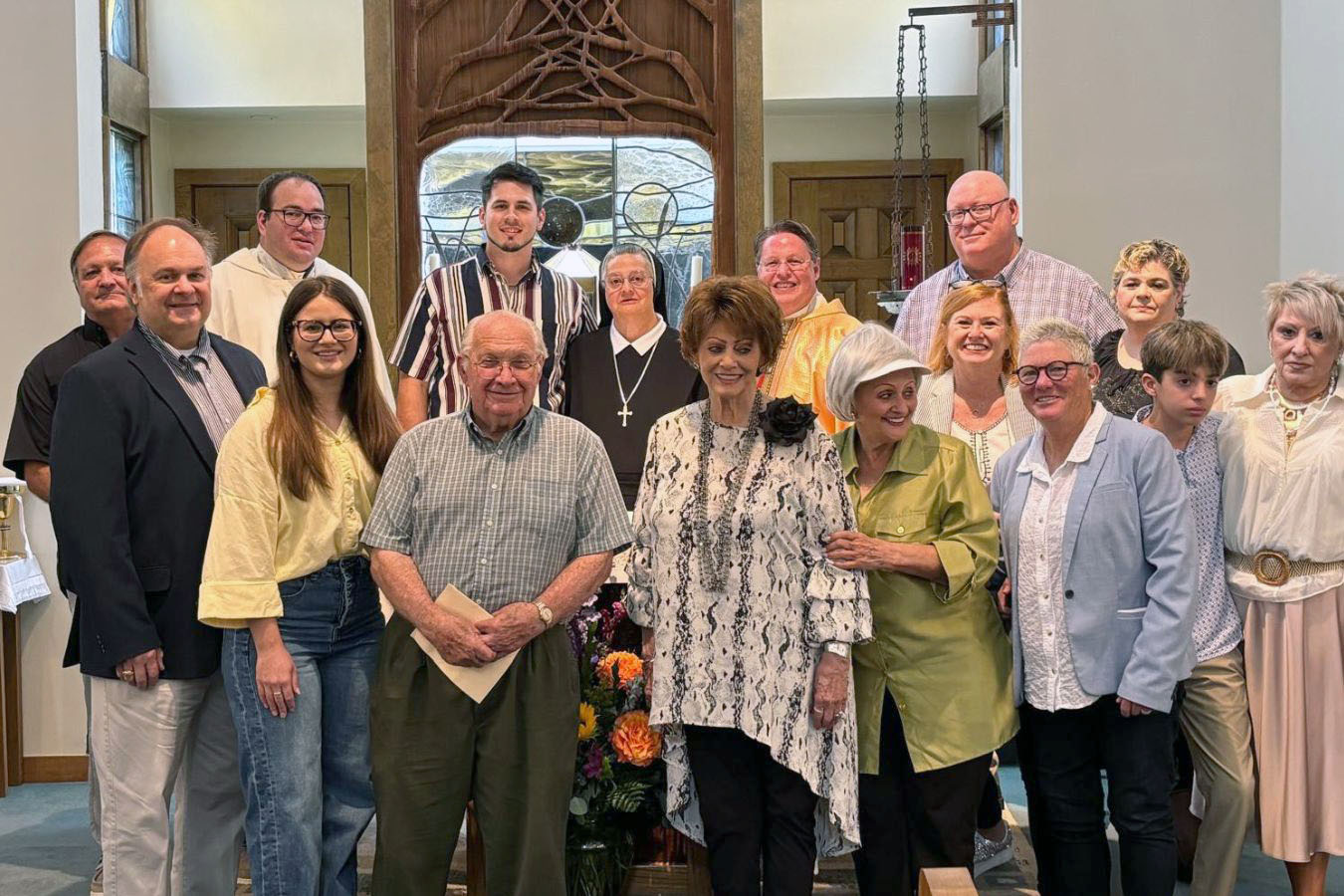
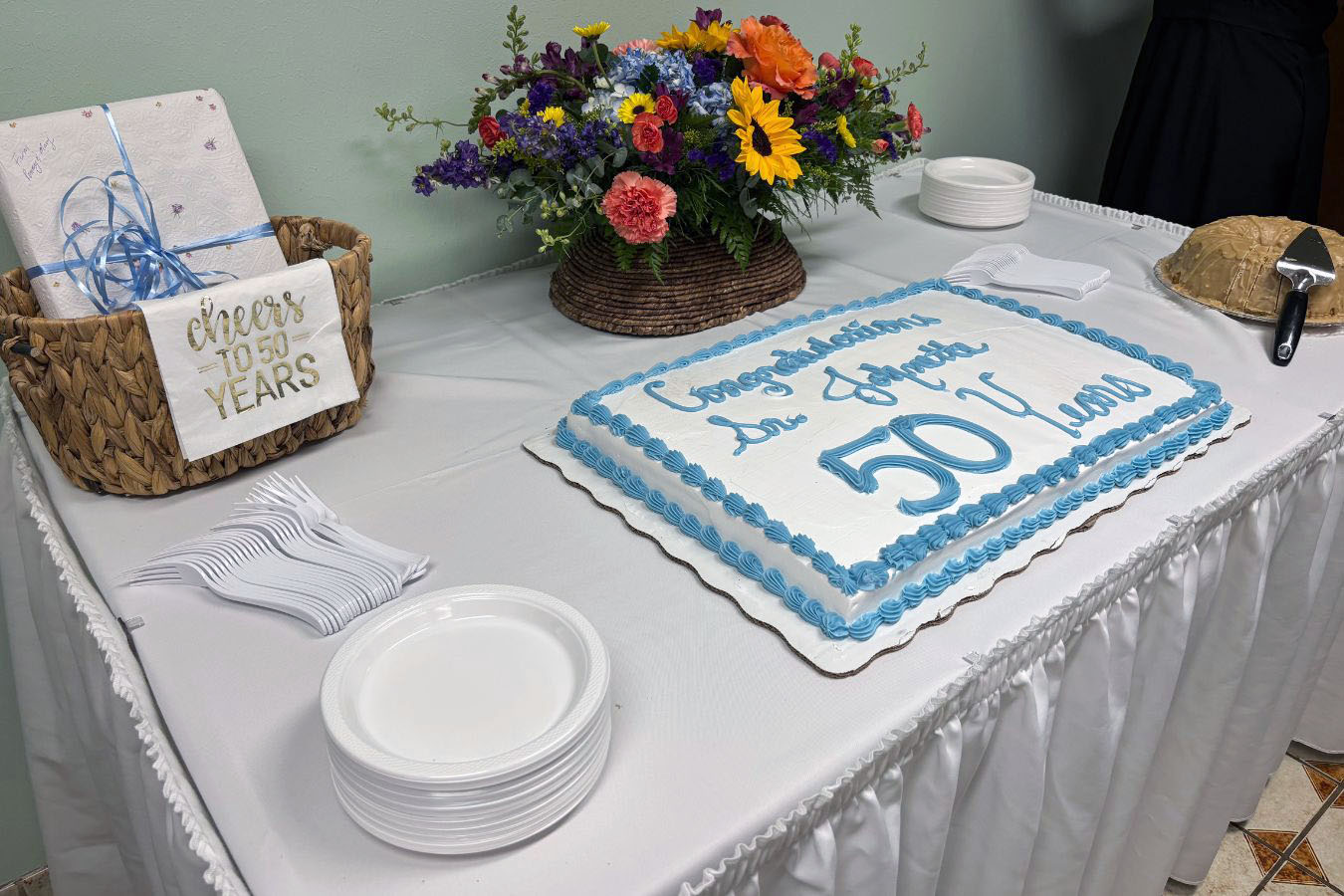
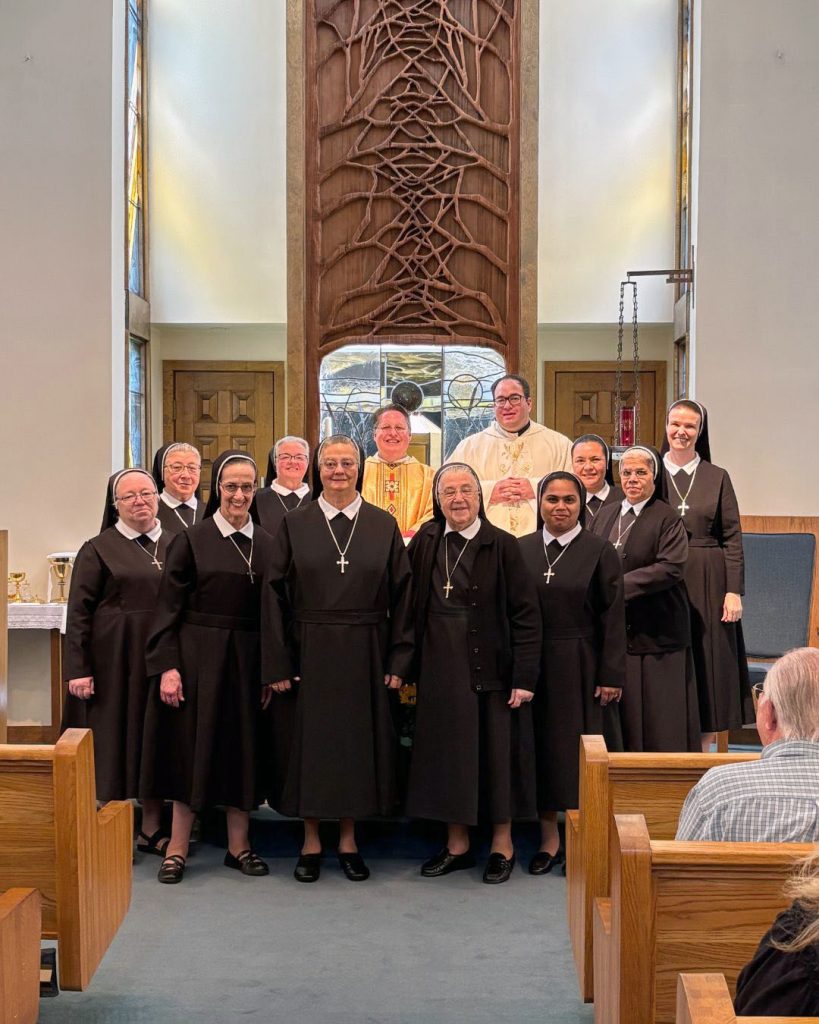
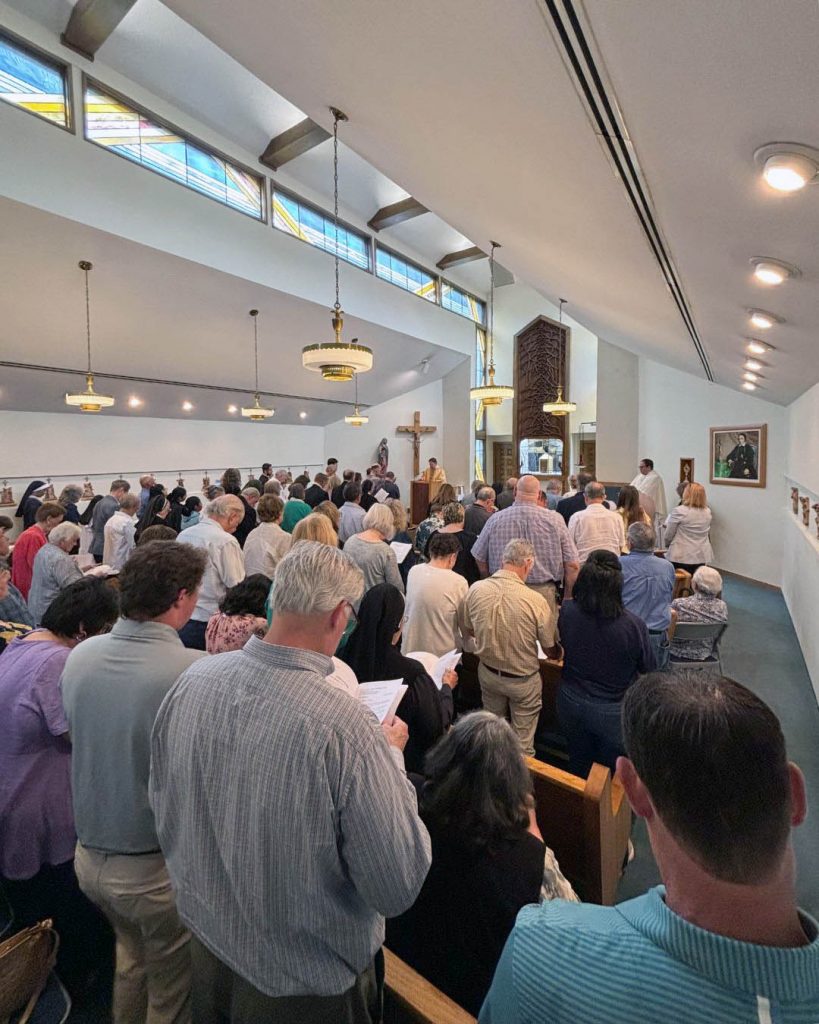
On a rainy Saturday morning in June, I attended a mass at Our Lady of Sorrows convent celebrating the 50th anniversary of Sister Johnnette Brocato’s vows to become a nun.
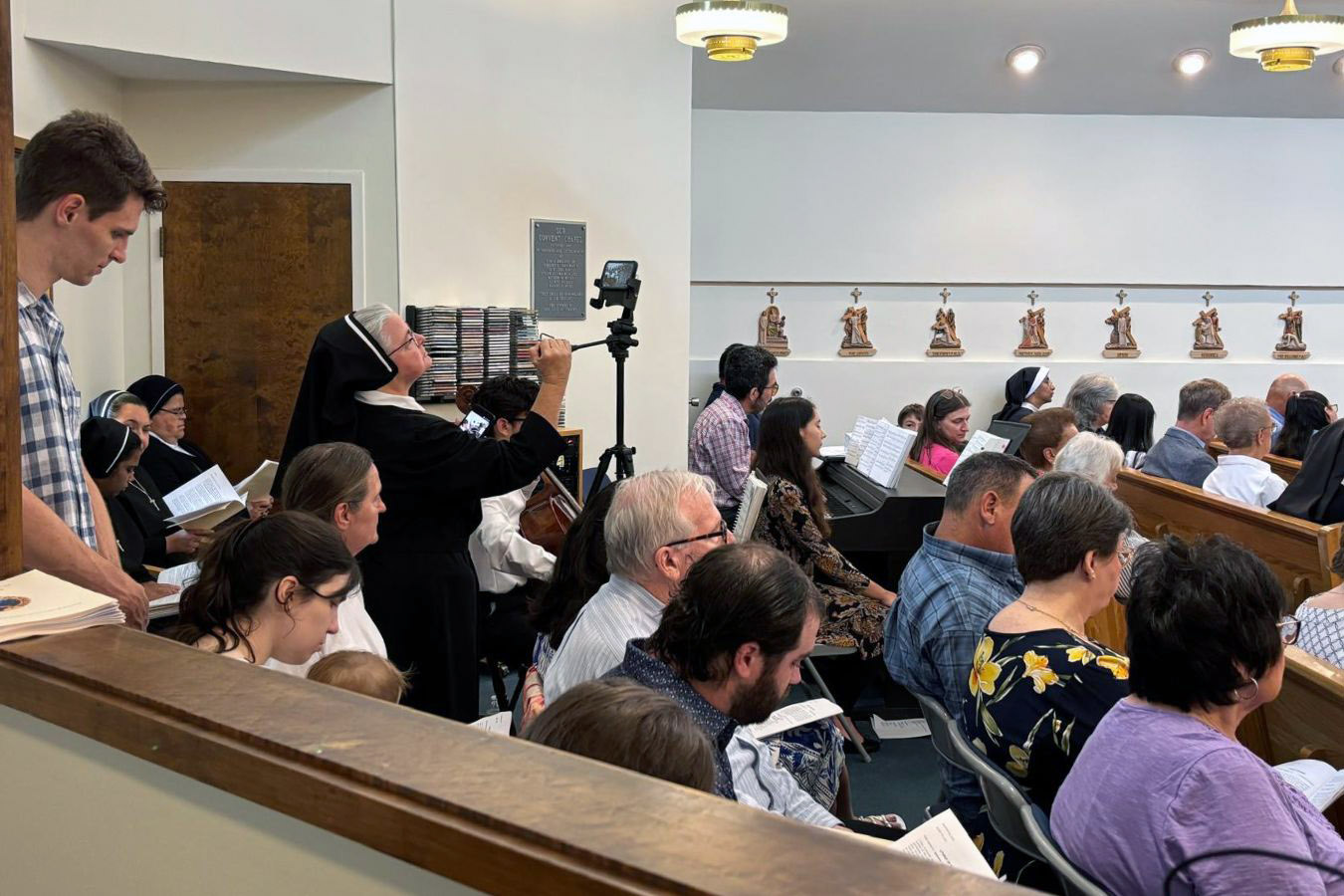
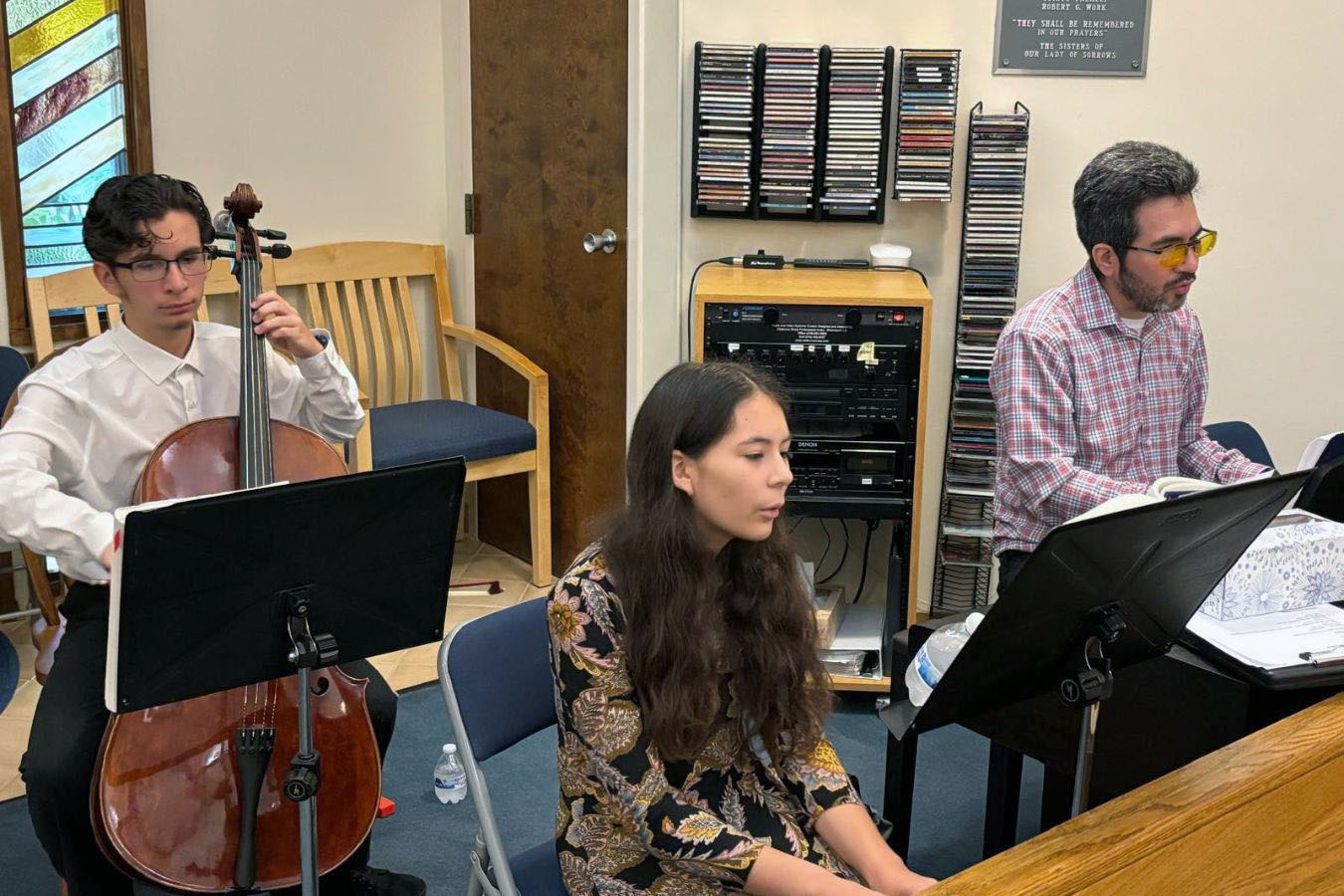
Despite the weather, attendance in the chapel was standing room only. Five priests, one seminarian, family members, friends, musicians, residents of St. Mary’s Community Home in Alexandria—a multitude of admirers were there to celebrate her Golden Anniversary. As I heard her softly and reverently re-dedicate herself to God, I began to wonder what brought her to this day? When and how was she moved to become a sister of this particular order? In today’s culture, this calling seems mysterious and extraordinary. A few days later, I sat with her in the quiet convent library and listened to her love story.
Bishop Greco was instrumental in the beginning. He had asked the sisters of this newly-formed congregation in Italy to come to the Diocese of Alexandria and assist poor and uneducated families who needed help with life skills. They established boys’ homes and later a school to address the needs of the mentally challenged. Some of the nuns were called to teach. A few of them were assigned to Holy Rosary in Shreveport where Johnnette was a student. She laughed as she told me she hated school but loved the nuns.
Johnnette and her twin sister were the youngest in a family of six children, all girls! Their mother died when Johnnette was nine months old. Her two older sisters took over much of the household responsibilities with the help of their maternal grandmother. Their father worked hard so that his girls could attend Catholic schools. “We didn’t have everything our classmates had,” she explained, “but we always had what we needed. And we loved each other dearly. We all took our daily responsibilities very seriously. We thought that was the normal thing to do.”
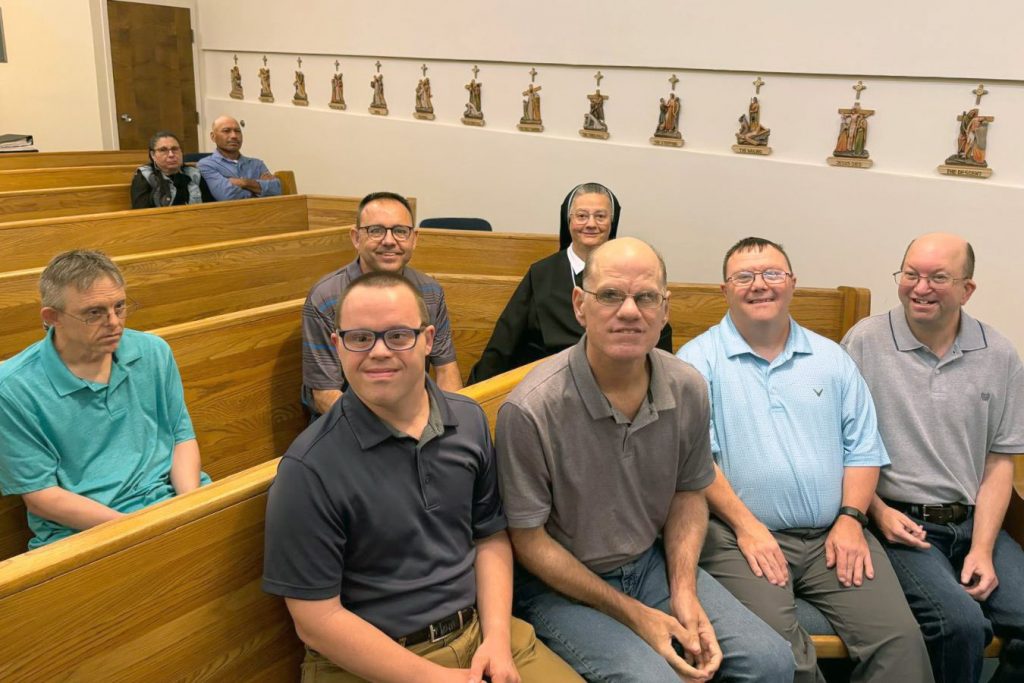
When she graduated from St. Vincent’s Academy, she had applied for a job with the post office. Then one of her former school teachers suggested she come to the small community of Clarks, located northeast of Alexandria, to help out in a residential school for children and adolescents with developmental disabilities. She instantly felt peace and happiness beyond anything she had ever experienced. “Maybe God is asking me something?” she wondered. She enrolled at Northeast Louisiana State University but stayed on in Clarks so she could help out with the residents there. After a few semesters, the sisters invited her to explore her vocation by travelling to Rome to live and study in their convent there to begin her novitiate. She described her call to vocation as “a peaceful gnawing.” She had known from childhood that she was being called to do something for God. Becoming a sister seemed to be her destiny.
Back in Shreveport, her family members were a bit skeptical. They hated to see her leave. She knew they thought she would give up this idea and return home quickly. Her beloved father took her aside and gave her some sage advice. “Sugar,” he told her, “You are choosing a hard life. But I want you to be happy and faithful. You have my blessing.” She spent the next two years in Rome, where she met her long-time companions Sister Anna Maria and Sister Carla and became convinced that this was the life God wanted her to live.
In 1976 she returned to Shreveport to take her vows at Holy Rosary. Sadly, her father suffered a stroke that morning and was unable to attend the ceremony. As soon as mass ended, she hurried to the hospital to be with him. He recovered and lived a few more years, but during her novitiate years she had little contact with her family. His death in 1978 filled her with sadness combined with a conviction that she must trust God.
She was assigned to teach school at Holy Rosary in Shreveport and Christ the King in Bossier City. “Teaching was not my thing,” she explained. She took her final vows and was transferred to St. Mary’s Residential Community in Boyce where she supervised 59 male residents ages 16-24 in a dormitory setting. She was back working with the developmentally disabled, a population that brought her challenges and great joy. “Those guys were tough,” she said with a grin, “but I was tougher!” She and Sister Carla helped to open three community homes for residents in the Boyce area. Those were the years when she was living her true calling to the fullest.
Twelve years ago she was transferred to the convent in Shreveport to help with the sisters here. I asked her to describe a typical day. “I’m a jack-of-all-trades and a master of none!” she explained with a smile. Morning prayers, breakfast, helping with the financial books, cooking, keeping up the maintenance of the property, helping sisters who need personal assistance—she does it all for the love of God. “I’m happy. It’s never boring. I can’t get to everything. But God is always there to help me.” I never heard a word of complaint.
My last question: “What would you say to a woman today who is trying to discern her vocation in life?” Johnnette had some words of wisdom. “God has a lot for us to do. You have to smell like a sheep in order to be one. Be ready to do it with no reservations. You must lose yourself, but trust me! You will gain more than you would ever believe possible.” She told me she has no regrets. “No human man could ever fit the bill for me. I wish I could be more pious. But God loves me just like I am. I can only blame myself when things don’t work out. Oh—one last thought. Don’t make plans because it won’t happen. GOD WORKS IN STRANGE WAYS.”
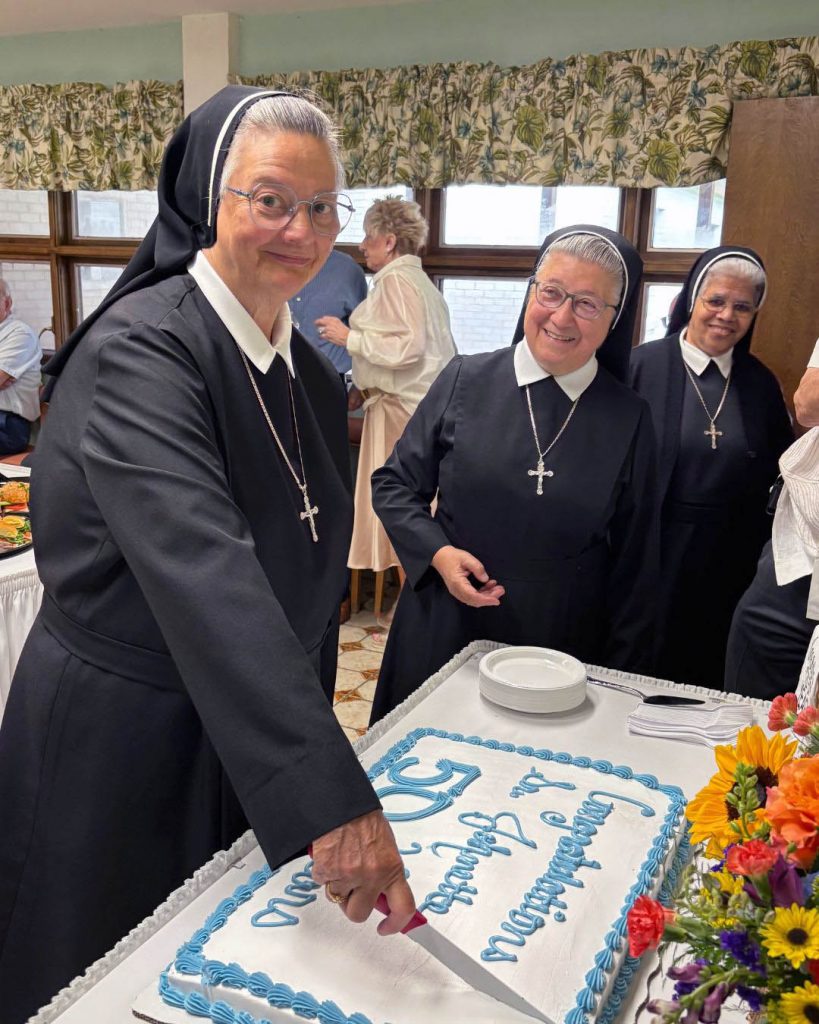
I came away thinking that all of us could apply her wisdom to whatever vocation we find ourselves in. Her contagious joy is a testimony to a decision she made fifty years ago. Happy anniversary, Sister Johnnette!
Jane